
Active Warrants in Ripley County
An active warrant is a court order that has been issued and not yet marked served, recalled, quashed, or resolved. Ripley County records often use the phrase outstanding warrant instead. Miss a hearing or break a court order, and a bench warrant can follow. An indictment or a judge's probable-cause finding can produce an arrest warrant. Either type stays active until the issuing court or law enforcement records a valid change. For a public starting point, Indiana MyCase may show a warrant event inside a Chronological Case Summary. It is not a live warrant database. The Sheriff, the Clerk, and the issuing court each hold a different piece of the record, so a high-stakes status check should reach all three.
No Ripley County Warrant Roster
The official Sheriff page carries contacts, a daily arrest report, an inmate list, jail and bond details, records access, and tax-warrant material. What it lacks is a warrant lookup. There is no name field, no warrant-number search, no status filter, no export tool, and no full active-warrant roster. The Sheriff also publishes no current warrant count. That gap does not make a third-party list safe to copy. MyCase plus direct confirmation is the sound route. It also means no one can honestly promise a refresh schedule, because a new order, a recall, and a service event may reach court and law-enforcement systems at different times. Ripley County is compact, yet its records still split among the Versailles courthouse, the Sheriff and Annex, and Batesville's two-county City Court. Town police and marshals work through their own contacts or Ripley County Communications. None of those agencies replaces the court that issued the order. That split is why one web page cannot settle every active-warrant question.
How the Ripley County Active Warrant List Works
Each office keeps its own slice. MyCase holds public court history, while the Sheriff's system supports service and custody work. The Clerk keeps Circuit and Superior records, and Batesville City Court is the direct contact for city criminal and traffic cases. If the court is unknown, search 69C01 Ripley Circuit Court and 69D01 Ripley Superior Court. The Odyssey participation directory confirms both Ripley County trial-court paths.
The directory points you to the right Ripley County court, but it reports no live warrant status.
Note: Ripley publishes no list cadence, and absence from a public case or custody report does not prove there is no warrant.
Ripley County Active Warrant Reports
A daily arrest report covers recent custody activity. An inmate list is a custody snapshot for that day. Either may list a charge, court, bond, booking status, or warrant reference, but neither shows every unserved Ripley County active warrant. A person can hold an active order and appear in neither document.
| Source | Useful for | Cannot prove |
|---|---|---|
| MyCase | Public case and CCS events | Live sheriff status |
| Arrest report | Recent custody activity | All active warrants |
| Inmate list | Current custody | No warrant when absent |
| Court and Sheriff | Current confirmation | That all details are public |
A tax warrant is a different animal in Ripley County. It is an Indiana Department of Revenue lien and collection tool, not an arrest order.
What an Active Warrant Shows
Indiana law sets what an arrest warrant must contain. It must identify the person with reasonable certainty and state the offense, the date, the county, and the issuing court. It must carry proper authority, command arrest, state bail if any, and direct the order to the sheriff. A MyCase docket may reveal only part of that for a Ripley County case.
| Cause number | County, court, filing details, type, and sequence, such as 69C01-YYMM-F0-000000. |
|---|---|
| Charge | Offense, class, infraction, or probation basis. |
| Issuing court | Circuit, Superior, or Batesville City Court. |
| Bond | Amount and type if publicly disclosed. |
| Status event | Issue, service, recall, quash, release, or new setting. |
The sample is not a real case. Confirm every actual entry with the named court. A date of birth can narrow a MyCase party search, yet the public case details do not display it. A cause or citation number is often a better match key, though the cause-number search may omit hyphens and leading zeros. When only a name is known, add a first or middle name and apply the court filters. That keeps similar Ripley County names from leading you to a mistaken conclusion.
Read Ripley County Active Warrant Status
The CCS is a timeline, not a one-word warrant meter. Read forward from the issue entry. Later entries may show service, recall, quash, bond, release, or a new hearing. A Ripley County case marked closed does not automatically mean the warrant is cleared, and an open case does not always mean an active warrant.
- Active
- Issued and not shown as served or withdrawn.
- Served
- Law enforcement carried out the order.
- Recalled
- The issuing court withdrew it.
- Quashed
- The court set it aside, while the case may continue.
Save any signed order, bond receipt, or release record you obtain. Ask both record keepers when their systems update. A recent warrant may not yet show in the public case view. The reverse happens too: a docket or downloaded report can still display older text after service or recall. Match dates carefully. If the CCS shows a failure to appear but no separate entry, ask the Ripley County court whether the judge issued a warrant and whether a later order changed it. A precise question gets a real answer; a broad name search proves nothing either way.
Most-Wanted Lists and Warrant Roundups
Ripley County runs no official most-wanted roster, Crime Stoppers list, warrant roundup, amnesty event, tip line, reward plan, or refresh cycle. No agency here publishes names or photos of wanted people. If a genuine program appears later, trust only the government source behind it.
No roster is reproduced.
Use official law-enforcement contact for current public-safety facts, and do not approach anyone based on an online claim.
An urgent threat belongs with emergency services. A routine Ripley County warrant check or records request belongs with the court, Clerk, or Sheriff.
Ripley County Active Warrant Confirmation
Before anything else, pick up the phone. Call 812-689-5555 for the Sheriff's 24-hour routing, or 812-689-5558 for ordinary office contact. Then call the Clerk at 812-689-6115. Circuit Court is 812-689-6226, Superior Court is 812-689-5117, and Batesville City Court is 812-933-6102. Have the legal name, date of birth, cause or citation number, court, and hearing date ready when you dial. Ask whether the warrant is active, which agency holds it, whether bond is listed, and which Ripley County court must act on it. The state Ripley court hub gathers public court routes. A phone call does not prevent arrest.
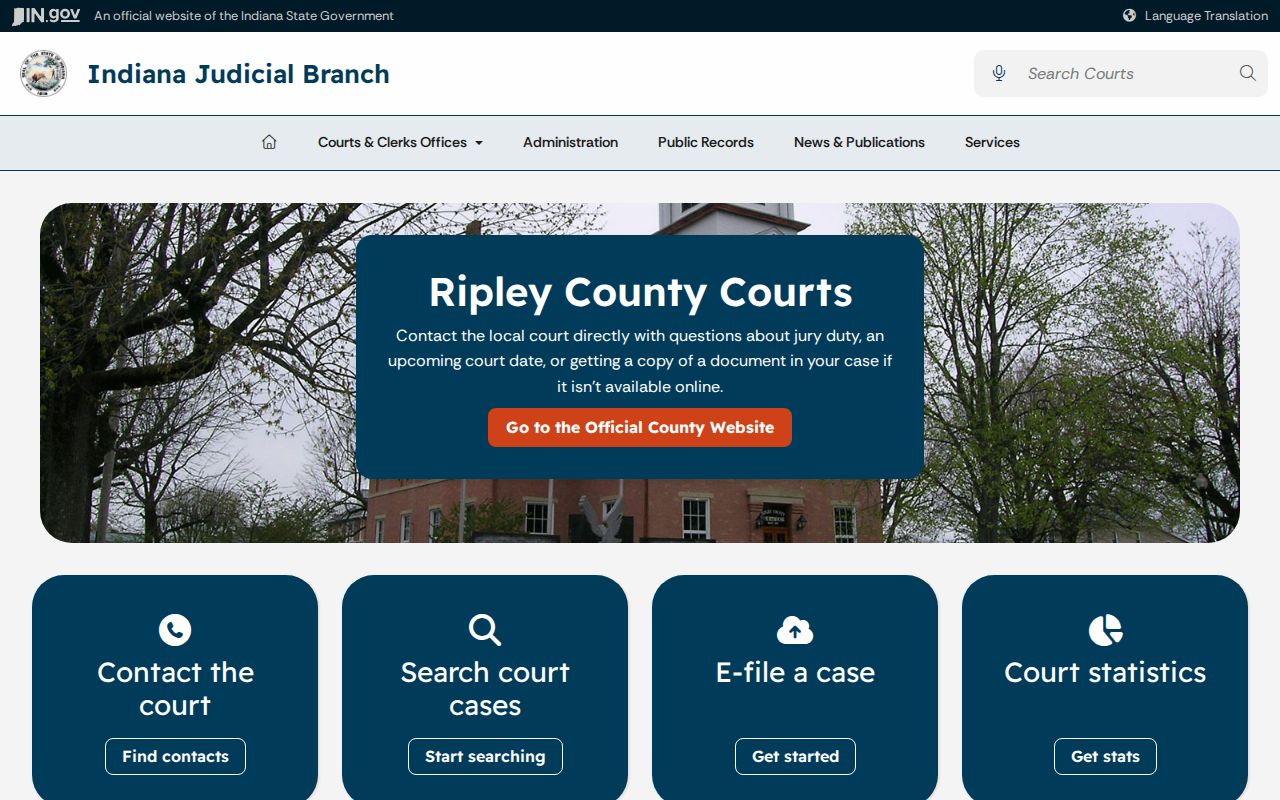
The hub helps with routing, but local offices decide the next step on an active warrant. For a Batesville matter, call City Court directly. Even if a county search comes back blank. City Court's jurisdiction crosses the Ripley County line into Franklin County. Circuit and Superior cases both run through the elected Clerk's Office. Each court still publishes its own phone. The old Versailles Town Court is not a fallback, since the state directory marks it abolished in 2015.
If Your Name Is on the List
If a search ties your own case to a warrant, verify the cause number and the court. Then ask what counsel can arrange. A written motion, a new setting, a scheduled surrender, or a confirmed bond process may all be possible. Ripley County offers no standing walk-in window. So do not assume a visit brings prompt release.
Plan before appearing.
Counsel can ask the issuing court about recall or surrender and help resolve an old or unclear entry safely.
Bond settles custody, not the case. Current local rules list cash-only bail for covered matters, a $500 misdemeanor schedule, and court-set bail for felony and other matters. Confirm the actual order. Keep proof, and attend the next hearing. The Ripley County warrant response steps lay out the broader sequence.
Ripley County Active Warrant Access
Indiana's APRA lets you request an existing Ripley County record. Name the cause number, court, and precise item. The law does not force the Sheriff to build a list nobody keeps, and it should name your date range. Sealed, juvenile, expunged, confidential, or investigatory material may be withheld. The current Indiana Title 5 source holds APRA itself.
APRA opens a door. It never promises that a protected or nonexistent warrant roster will be released. Note: The Sheriff's posted form concerns law-enforcement recordings and is not a warrant-status or recall form. The county form covers one recording per request. It offers standard or enhanced access choices. Those controls cover recordings, not a Ripley County warrant recall. A warrant-record request should instead go to the office likely to hold it, with a reasonable description. Ask whether Ripley County wants it by mail, email, or another written route, and expect lawful redaction when protected facts are mixed in.