
How to Search for a Warrant in Ripley County
Begin with Indiana MyCase, the broadest public route into Ripley County court records. Know what it is, though. MyCase searches public case files, not a live sheriff warrant repository. A search by cause or citation number works best when you have one. Otherwise, a party search can take a last name, a first or middle name, and a date of birth to cut down the matches. Read the Chronological Case Summary, the CCS, line by line. It records warrant activity, failure to appear, bond, recall, service, and new hearing dates. Keep the full legal name, birth date, cause number, court, and approximate hearing date close at hand, since the Clerk and the Sheriff use those facts to separate people with similar names. If a possible warrant turns up, do not guess its force from one docket line. Only the issuing court controls recall, bond, and the next setting, while the Sheriff can speak to current execution. A lawyer can place those calls and arrange a lawful response.
- Search MyCase by cause number, citation number, or party name. Do not treat it as a dedicated warrant list.
- Check both 69C01 Ripley Circuit Court and 69D01 Ripley Superior Court when the court is not known.
- Call Batesville City Court at 812-933-6102 for its city criminal, traffic, or ordinance case.
- Confirm current status through the Clerk at 812-689-6115 and Sheriff at 812-689-5555, not through 911.
- Ask the correct custodian for a particular existing record under APRA if public case data does not answer the question.
Ripley County Warrant MyCase Search
MyCase is the wide public layer for Ripley County warrant records, and the Indiana Judicial Branch county hub routes readers straight to it. The state directory confirms that both Ripley trial courts sit on Odyssey, so their dockets flow into the system. One catch: MyCase may show the case and the CCS without the signed warrant image itself. A docket event can point to a warrant, but only the court and law enforcement can confirm its present status. The state search interface shows the controls the page offers.
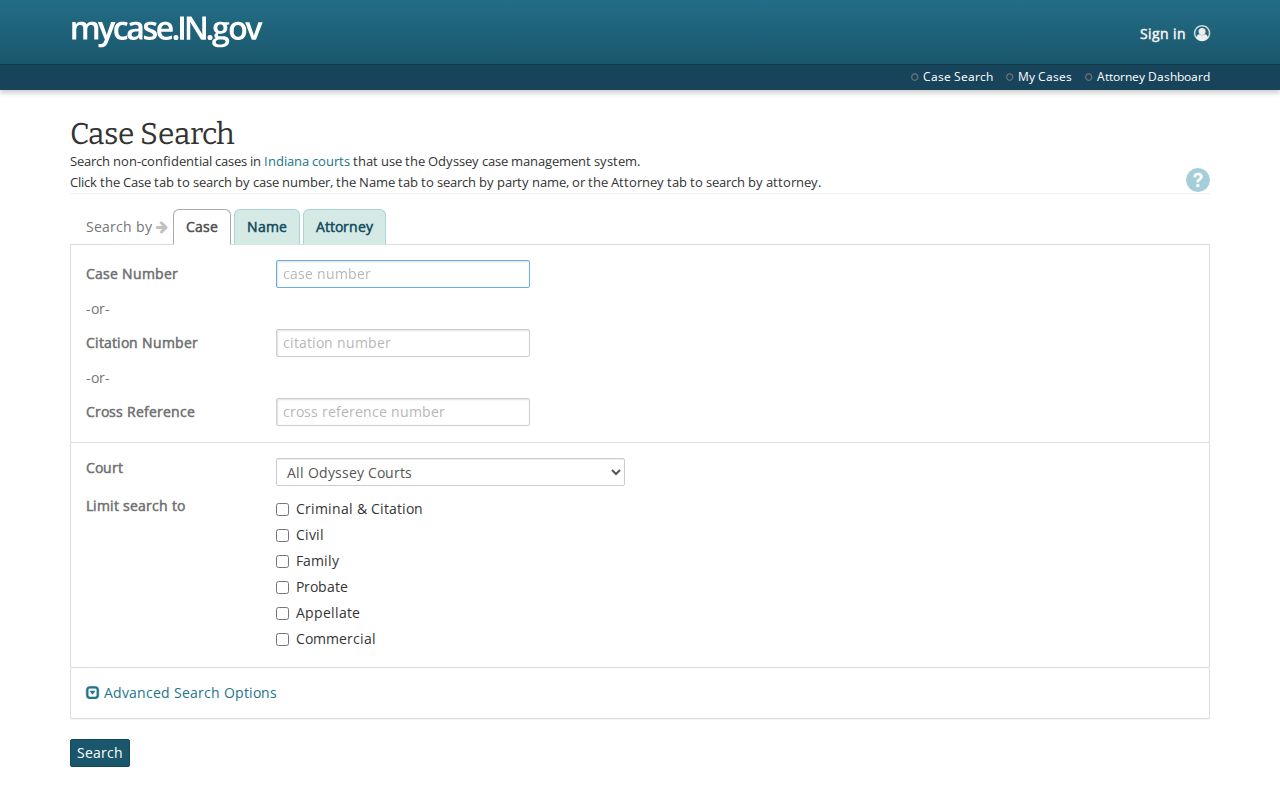
The Ripley County search screen itself stays neutral. It runs a case-based check without showing any one person's record here.
Ripley County Warrant Search Fields
The official MyCase search tips spell out the controls. A cause number is the strongest handle, and you may leave out hyphens or leading zeros. A name search starts with the last name. Add a first name, middle name, or date of birth to narrow common matches. One quirk: birth dates are not displayed in public case details, and a missing date in the court record can exclude a case from results.
| Field Label | Type | Required | Notes |
|---|---|---|---|
| Last name | Text | Party route | Wildcard may replace the trailing part of a name. |
| First or middle name | Text | No | Narrows a common last name. |
| Date of birth | Date/text | No | Searchable but not shown in public details. |
| Case or citation number | Text | Alternative | Cause numbers may omit hyphens and leading zeros. |
| Court and status | Filters | No | Choose Ripley courts; open is not the same as active warrant. |
Sounds-like search catches spelling variants, but it will not combine with a wildcard. Filters for court, case type, status, and file date shrink a broad result. MyCase caps results at 1,000, so a narrow Ripley County search beats a countywide name sweep.
Ripley County Warrant Court Codes
Ripley County case numbers carry a local court map. The prefix 69 marks the county. Code 69C01 points to Ripley Circuit Court, and 69D01 points to Ripley Superior Court. Later digits give the filing year and month, case type, and sequence. These are sample segments, not a real case.
- CCS
- The Chronological Case Summary, which lists docket events, orders, hearings, bond activity, and possible warrant action.
- Active
- Issued and not shown as served, recalled, quashed, or otherwise resolved.
- Recalled or quashed
- The issuing court withdrew or set aside the warrant. The case may still remain open.
- Served
- Law enforcement carried out the warrant.
A closed flag does not prove a warrant was cleared. Read the event entries, then confirm with the issuing court. Official field and wildcard guidance explains how the search tools behave.
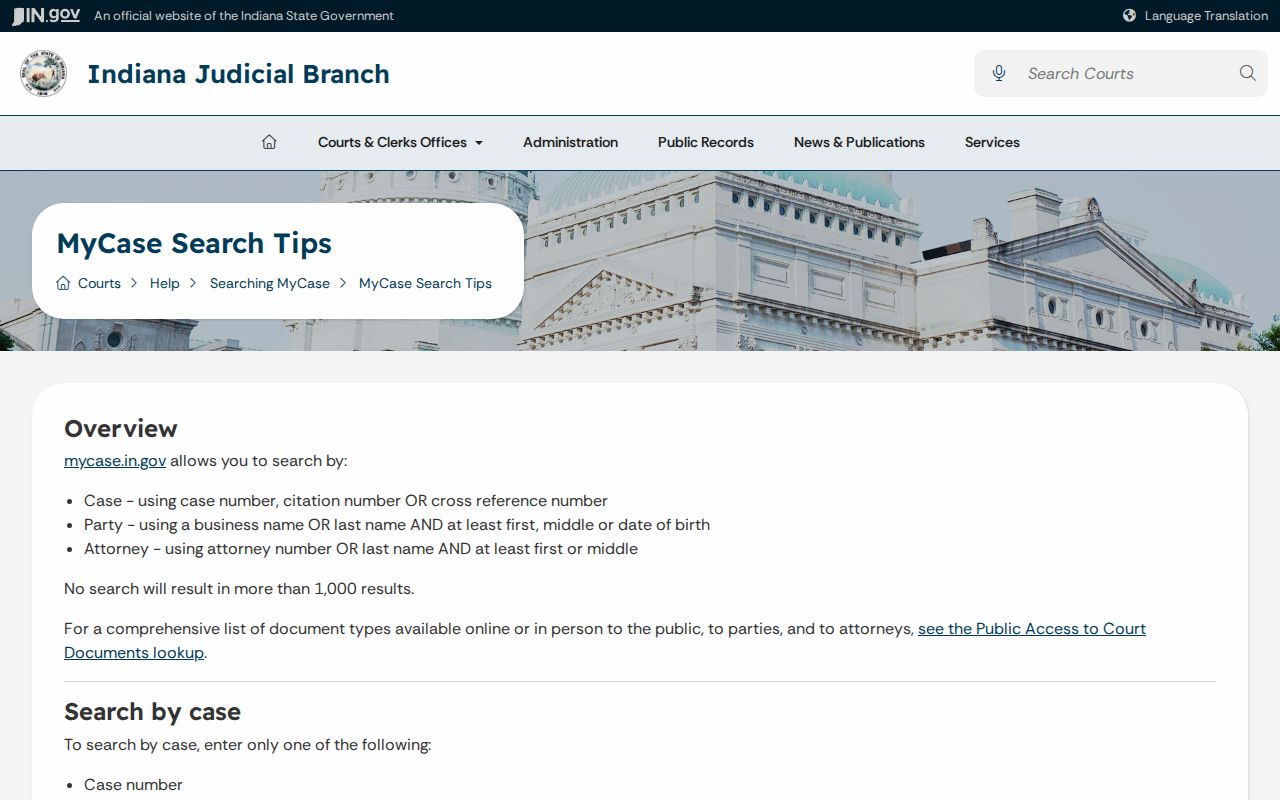
That guidance narrows a Ripley County warrant search. The final status call still rests with the local court and Sheriff.
What a Ripley County Warrant Search Returns
A public result can show the court, case type, filing date, party, charge, hearings, bond or release activity, and the CCS. Indiana law defines a warrant's core fields, but MyCase may not publish the full instrument. Look for the issue date, any service or recall event, and the next setting. A sample like 69D01-YYMM-CM-000000 shows the format without pointing to a real case.
| Cause number | County, court, filing period, case type, and sequence. |
|---|---|
| Charge or offense | The filed offense, infraction, ordinance, or probation matter. |
| Issuing court | Circuit, Superior, or Batesville City Court. |
| Bond | Amount or type if the public docket or order discloses it. |
| Warrant event | Issue, failure to appear, service, recall, quash, or later setting. |
A CCS entry is not a certified copy of the warrant. For a court document that is not online, contact the Ripley County Clerk. Ask whether a certified copy exists and what fee applies.
Why Ripley County Warrants Stay Hidden
A warrant may be missing from public view for simple reasons. It was just entered, it sits in a different court, or it belongs to a record excluded from public access. Sealed indictments, expunged matters, juvenile files, confidential material, and investigatory records do not behave like an ordinary adult docket. Even when the case is visible, the signed warrant may not be. Indiana's court-record access routes send readers to MyCase first and to the local Clerk when the needed document is not online.
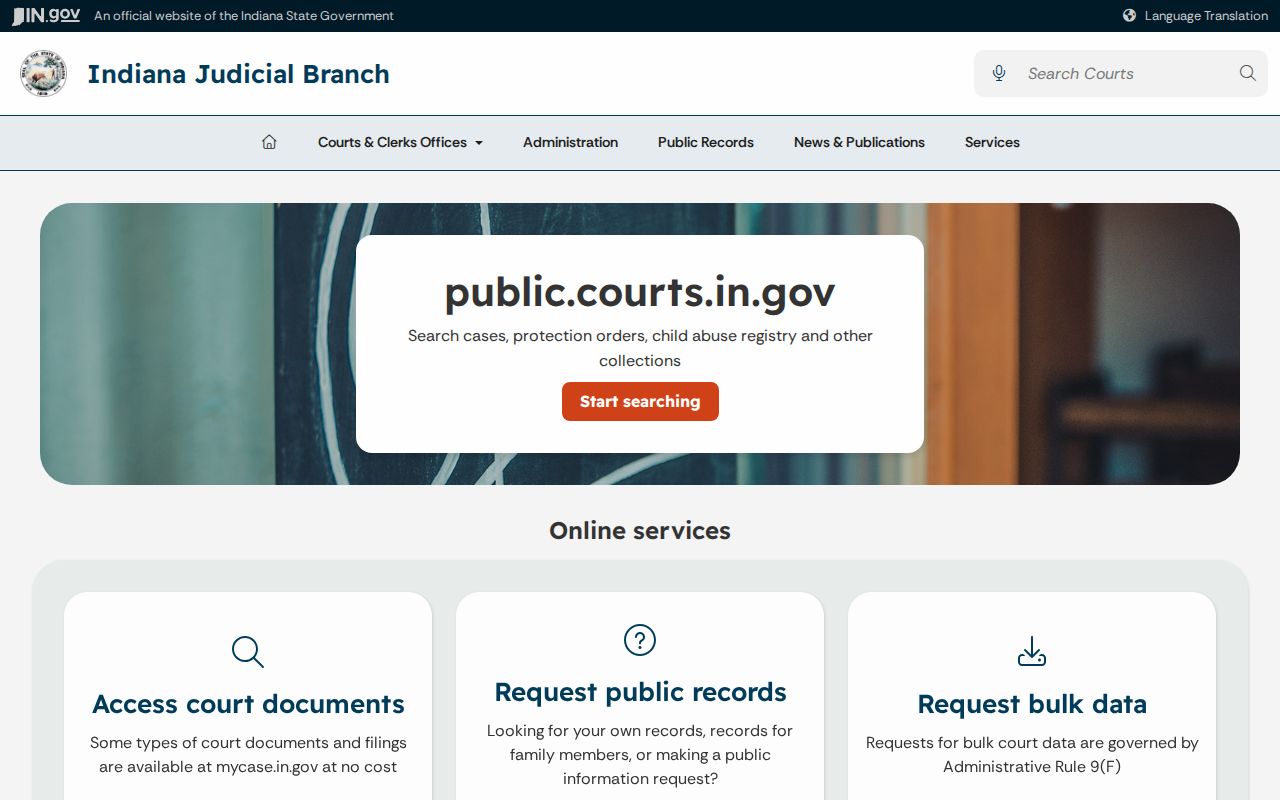
That Clerk fallback completes a Ripley County warrant search. It is not a sign that an unavailable record is public.
Where Ripley County Warrants Are Checked
Court records come first for a Ripley County warrant check. MyCase shows the statewide case layer, and the Ripley County Clerk holds the local files. Ripley Circuit Court takes the higher felony levels under the local assignment plan. Ripley Superior Court covers Level 6 and older D felonies, misdemeanors, protective orders, and some infraction or ordinance matters. Batesville City Court runs its own docket for covered city criminal and traffic cases in both Ripley and Franklin Counties. Enforcement and custody details sit with the Sheriff. Call 812-689-5555 for current confirmation or routing, or 812-689-5558 for the ordinary office line. Indiana publishes no public statewide active-warrant search. MyCase remains the court-case layer, while the separate e-Tax Warrant system concerns liens, not arrest warrants. Note: the state directory marks the former Ripley/Versailles Town Court abolished, so it is not a current warrant desk.
Ripley County Warrant Phone Confirmation
The Ripley County Sheriff's Office posts no public full-warrant search box. Its daily arrest report and inmate list describe recent custody only, not every open warrant. So a routine Ripley County warrant check runs through the published office or 24-hour number. Do not call 911. Ask whether the warrant is active, which agency holds it, whether bond is set, and which court controls the next step. A dispatcher may not disclose each detail. A phone call will not prevent arrest either. The safer resolution is to coordinate with the issuing court and counsel before appearing. Batesville matters deserve one extra call. If the case is a Batesville City Court traffic matter, contact that court as well, because its two-county jurisdiction defeats a simple county-only assumption. When an existing law-enforcement record is not online, ask the Sheriff's records custodian about a particularized APRA request. State the cause number, court, date range, and exact record. The public recording-request form is limited to recordings and is not a warrant search. Copy or certification costs may apply. No warrant-specific fee appears in official text, so confirm the amount before ordering.
Ripley County Warrant APRA Requests
Indiana's Access to Public Records Act can open an existing county-agency record that is open to inspection. You must identify it with reasonable particularity. For your own case, name the court, cause number, approximate date, and exact item, such as the warrant entry or a related execution record. A broad demand for "all warrants" does not make the Sheriff create a new database. Start by asking which office is the custodian. Ask how it accepts a written request. The court-record route may run through the Ripley County Clerk, while a law-enforcement execution record may sit with the Sheriff. Inspection itself is generally not charged as a search fee under APRA. Reproduction, media, certification, or postage costs can still apply. No warrant-specific copy fee is published, so request a current quote from Ripley County.
Access and Restricted Warrants
The Indiana Rules on Access to Court Records keep court records public unless a rule, statute, or order excludes them. APRA also permits lawful withholding or redaction. A request must still identify an existing record with reasonable particularity. None of it obliges Ripley County to create a warrant roster the county does not maintain.
Key rules:
Sealed, expunged, and confidential records stay outside ordinary public search.
Indiana juvenile law-enforcement records are generally confidential, subject to statutory exceptions.
An unserved or investigatory record may be withheld, so no result is not final confirmation.
For your own record, state the cause number, court, date range, and exact item sought. The Sheriff's online form covers law-enforcement recordings only. It is not a warrant status or recall tool. Ask the records custodian how to submit a warrant-record request, and see the current Rule 9 access process for records excluded from public access.
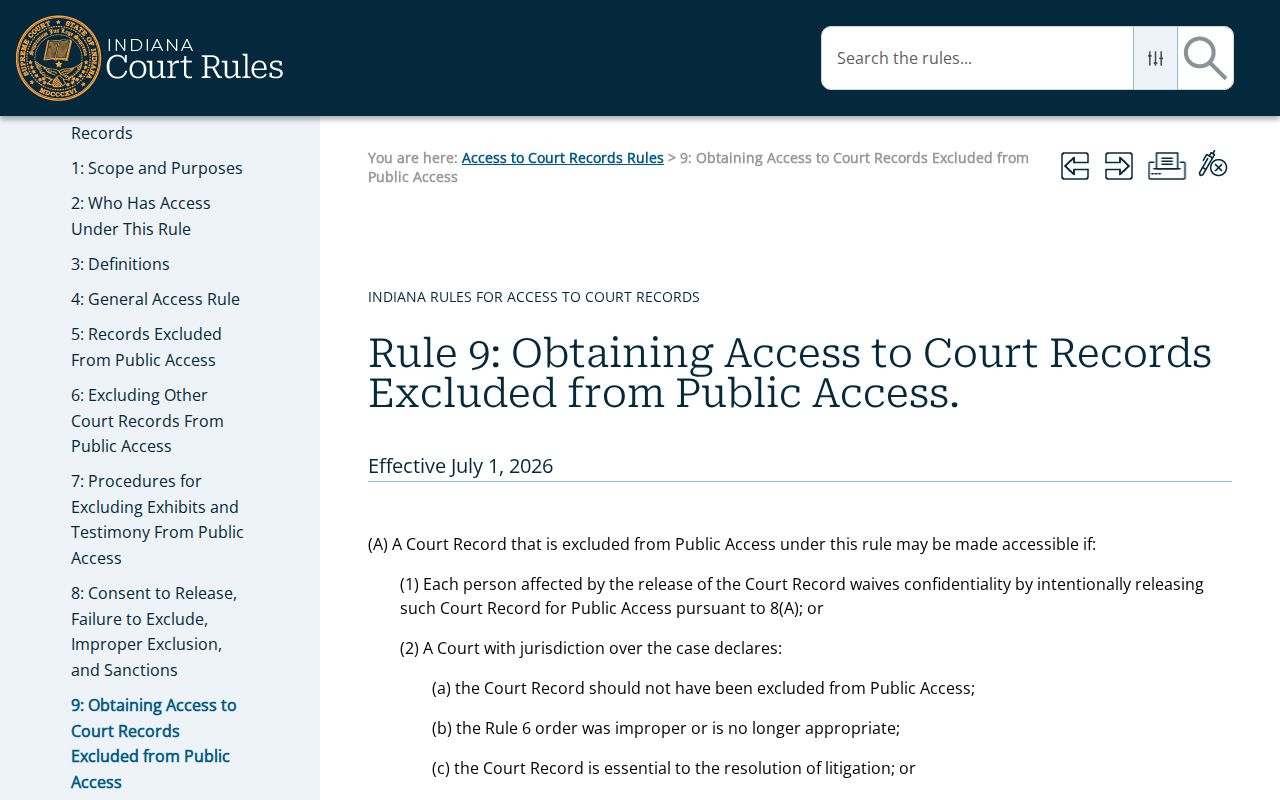
Rule 9 gives Ripley County requesters a legal route, though it never promises release of a protected warrant record.