
Arrest Warrants in Ripley County
Indiana Code 35-33-2-1 sets two paths. When an indictment is filed against a defendant not already in custody, the court issues the warrant with no separate probable-cause finding. The grand jury has already spoken. An information works differently. There, a judge must find probable cause first, and no warrant on an information may issue before that finding and the filing itself. Either way, the signed command authorizes arrest and sends the person to court without needless delay. Ripley County adds its own assignment layer. Level 1 through 5 felonies and older A through C categories land in Circuit Court. Level 6 and older D felonies, plus misdemeanors, go to Superior Court, and the filing court shapes the docket, bail, and next appearance.
Ripley County Arrest Warrant Path
Every Ripley County warrant starts with a charge. The State files it, and a judge or magistrate makes the required review. Only then does the court issue the signed order. The Clerk records it and routes the paperwork. The sheriff receives it as directed recipient. In Ripley County, search warrants follow a separate statute and authorize a search, not the arrest of a named person. A public MyCase docket may show the criminal case and its probable-cause or warrant events. It usually omits the affidavit and signed image. Sealed indictments, confidential filings, and investigatory records may remain unavailable too. So a missing image proves nothing either way. An indictment is a grand-jury charge. An information is a State-filed charge needing the statutory probable-cause finding. Probable cause means facts giving a judge a reasonable basis to believe an offense occurred and that the named person was involved. The criminal case still has to proceed in a Ripley County court.
What a Ripley County Arrest Warrant Contains
Indiana Code 35-33-2-2 lists the required fields. A cause number such as 69D01-YYMM-F6-000000 can identify the county and court, though the sample is not a real case. The public docket fills in the rest. It can add charge level, hearing, attorney, bond, release, service, recall, and next-setting entries.
| Person | Name or description identifying the person with reasonable certainty. |
|---|---|
| Offense | The criminal offense stated in the warrant. |
| Issuance | Date, county, issuing court, and official signature or title. |
| Command | Direction to arrest and bring the person before the court. |
| Bail | Amount or terms if the warrant states bail. |
| Recipient | Direction to the county sheriff. |
The Sheriff may hold the execution record while the Clerk keeps the court order. Check both for current status.
Ripley County Arrest Warrant Courts
Ripley County runs two trial courts. Ripley Circuit Court is the general-jurisdiction trial court. It takes the higher felony groups under the current county plan. Ripley Superior Court gets Level 6 and older D felonies, misdemeanors, protective orders, and some infraction or ordinance work. One elected Clerk's Office serves both Ripley County courts. The official Circuit Court page posts the court's public contact details and resources.
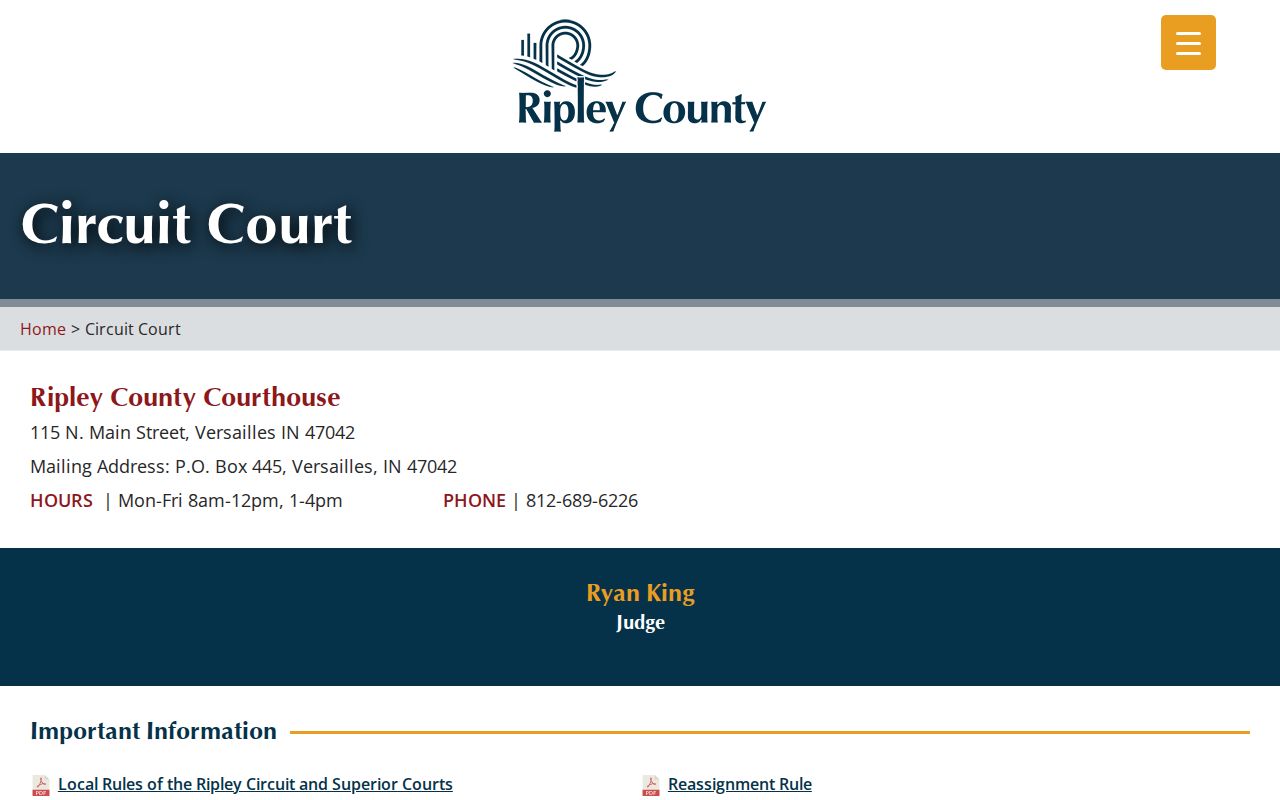
The page helps route a higher-level Ripley County felony case, but court staff must confirm case-specific warrant and appearance details. Check the cause prefix. 69C01 means Circuit and 69D01 means Superior. Search both courts if you do not know which one has the case.
How Ripley County Arrest Warrants Are Served
The Ripley County Sheriff and deputies handle most warrant service and county custody. Batesville Police and the town police or marshals in Milan, Osgood, Sunman, and Versailles can serve or coordinate warrants within their authority. Indiana State Police can step in. So can another county when an arrest, transport, or cross-county matter calls for it. After arrest comes booking. The person is then brought before a judicial officer. The court controls bail and the next appearance. The Ripley County Sheriff's daily report or inmate list may show custody later. Neither one is a full record of arrest warrants. Note: Federal warrants run through the Southern District of Indiana and the U.S. Marshals, not Ripley MyCase.
Ripley County Arrest Warrant Roles
Ripley County splits warrant duties across three offices. The Sheriff receives and executes the order. The issuing court decides whether it stays active, sets or changes bail, and controls recall and the next setting. The Clerk keeps and routes the public court records, and though the roles overlap around one case, they are not interchangeable.
| Office | Primary arrest-warrant role | Public route |
|---|---|---|
| Sheriff | Execution, custody, current holding information | 812-689-5555 or 812-689-5558 |
| Circuit Court | Higher assigned felony cases | 812-689-6226 |
| Superior Court | Level 6 felonies and misdemeanors | 812-689-5117 |
| Clerk | Court record and filing route | 812-689-6115 |
Call before you show up. Ripley County publishes no standing warrant walk-in window. It also promises no release after an inquiry. Town and city officers belong to the service network, not separate warrant courts. Batesville Police can act within its own authority. Milan, Osgood, Sunman, and Versailles publish local police or marshal contacts and route dispatch through county communications. A state warrant may also be served outside Ripley County by authorized agencies. Even then, the issuing Ripley court keeps control of its bond, recall, and next setting.
Arrest Warrant vs Summons vs Bench Warrant
These court papers demand different responses. A Ripley County arrest warrant commands custody after the charge and probable-cause path. A summons orders an appearance, not an arrest. A bench warrant authorizes arrest after a missed duty or breach in a case already open.
| Feature | Arrest Warrant | Summons | Bench Warrant |
|---|---|---|---|
| Order | Arrest and court appearance | Appear as directed | Arrest for missed duty |
| Basis | Indictment or probable cause | Charging process without first custody | Failure to appear or comply |
| Issuer | Judge or magistrate | Court process | Judge in existing case |
| Response | Planned surrender, bond, court | Attend on time | Recall, quash, bond, appearance |
Missed a hearing in Ripley County? The Ripley County bench-warrant record covers that path, plus what a skipped court condition can trigger.
When Ripley County Arrest Warrants Stay Sealed
MyCase can show a case yet hide the signed arrest warrant, probable-cause affidavit, or sealed indictment. Some records are closed by law, rule, or order. Juvenile and expunged files are not ordinary adult public cases. An investigatory record may be withheld or redacted, so a Ripley County arrest warrant can stay sealed even when the case is visible. The Indiana court-record rule index lays out the public-access framework that governs this.
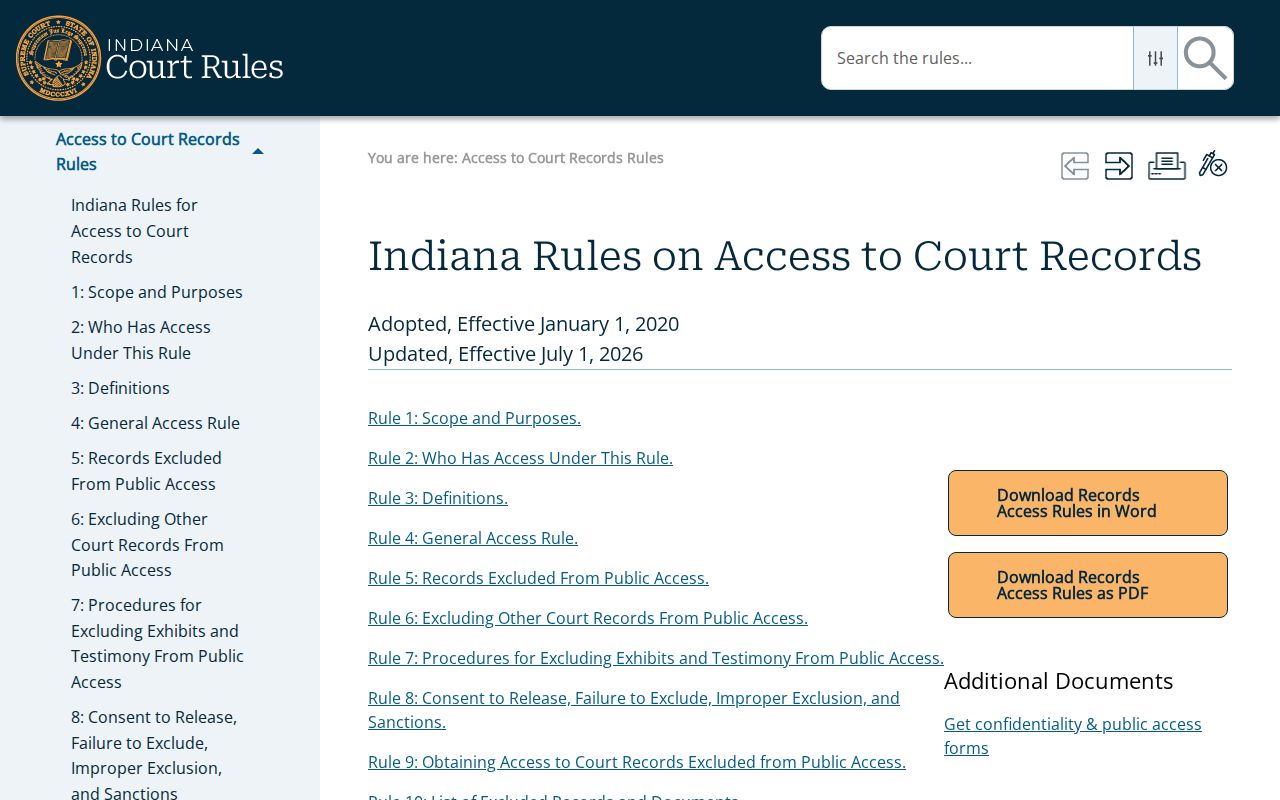
That framework explains a puzzle people hit in Ripley County. A case shows online while the warrant image stays unavailable. Both can be lawful at once. A specific access request should name the case, court, date range, and record, but it cannot force the county to build a new list.
What to Do If There's a Warrant for You
Verify the details first. Confirm the cause number, court, charge, and current warrant event through MyCase, the Clerk, the court, and the Sheriff. Then ask counsel whether the judge will consider a filing, a planned surrender, or an appearance arrangement. Walking into the Sheriff's Office does not guarantee prompt release. And an online payment will not recall a Ripley County arrest warrant on its own.
Plan first: Speak with counsel and the issuing court before surrender because a valid arrest warrant can be served during police contact.
If bond is ordered, confirm the exact amount and accepted method. Ripley County local rules list $500 bail for misdemeanors and specified misdemeanor probation matters, cash-only terms for covered bail, and court-set bail for felonies and other matters. A bond receipt only addresses release. Keep the order and show up for the new hearing.
Ripley County Arrest Warrant Response Plan
Start with MyCase, then call the issuing court. Need a public document that is not online? Contact the Clerk. For current routing and execution information on a Ripley County warrant, call the Sheriff at 812-689-5555, not 911. Have the legal name, birth date, cause number, court, and any known hearing date ready.
- Verify the case and issuing court.
- Ask counsel about surrender, bond, and any proper written motion.
- Report only to the place and time confirmed by the responsible office.
- Complete booking and the court appearance as ordered.
- Retain the release order, receipt, and next-setting notice.
Once you act, ask when the court and law-enforcement systems will show it. A lagging public record should be checked against the signed order. Ripley County local rules add one protection. A person arrested without a warrant is released on recognizance after 48 hours unless a Circuit or Superior judge makes the required probable-cause finding within that time. That rule promises nothing when the warrant is valid. It cannot predict how a planned surrender will go. The actual warrant, bail order, holds, and case facts control.